
At Autoreview we are all but pioneers of testing cars through car-sharing. When Toyota was reluctant to lend us the then-new RAV4, we took turns with a rented one. A month later we ran a comparison between a rented Audi A3 and a Mercedes CLA, the press fleets having closed for the COVID quarantine. The press fleets are working again now — and yet, to get acquainted with the electric Moskvich 3e, I have opened the short-term rental app once more.
Finding One to Rent
I use short-term car rental about once a week — on evenings when there is a gathering with friends at a bar and the metro home afterwards, or for trips into central Moscow, where parking is very expensive. It was on one of those occasions that I got to know this electric car, though first I had to track it down.
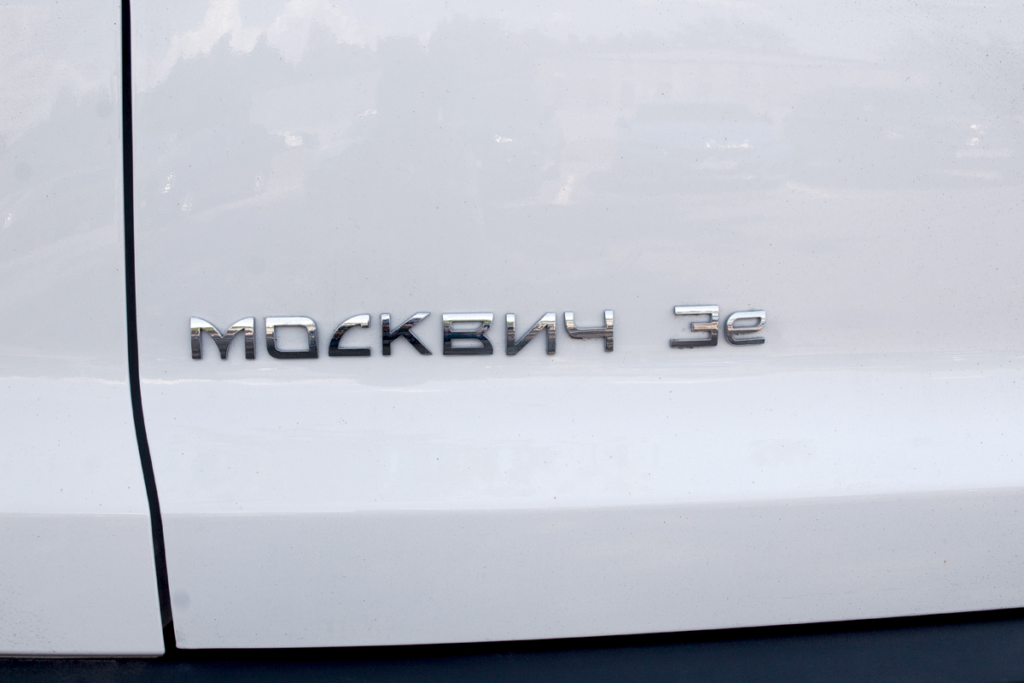
There are hundreds of petrol Moskvich 3 crossovers in Moscow’s car-sharing fleets; the electric ones can be counted on one hand. For a long time they were always too far away — every time I opened the app, the nearest available electric car was on the other side of the city. Waiting for somebody to deliver one to my street could have taken forever, so when a Moskvich 3e finally turned up in my area I drove to it in another car-sharing car, a petrol one.
Not many people want to drive an electric Moskvich, largely because minute-by-minute billing is not available for it. Either you set an address and the app quotes the whole trip up front, or you rent for a fixed period at a fixed price:
- 30 minutes — 440 rubles
- 60 minutes — 850 rubles
- 90 minutes — 1220 rubles
I chose the latter.
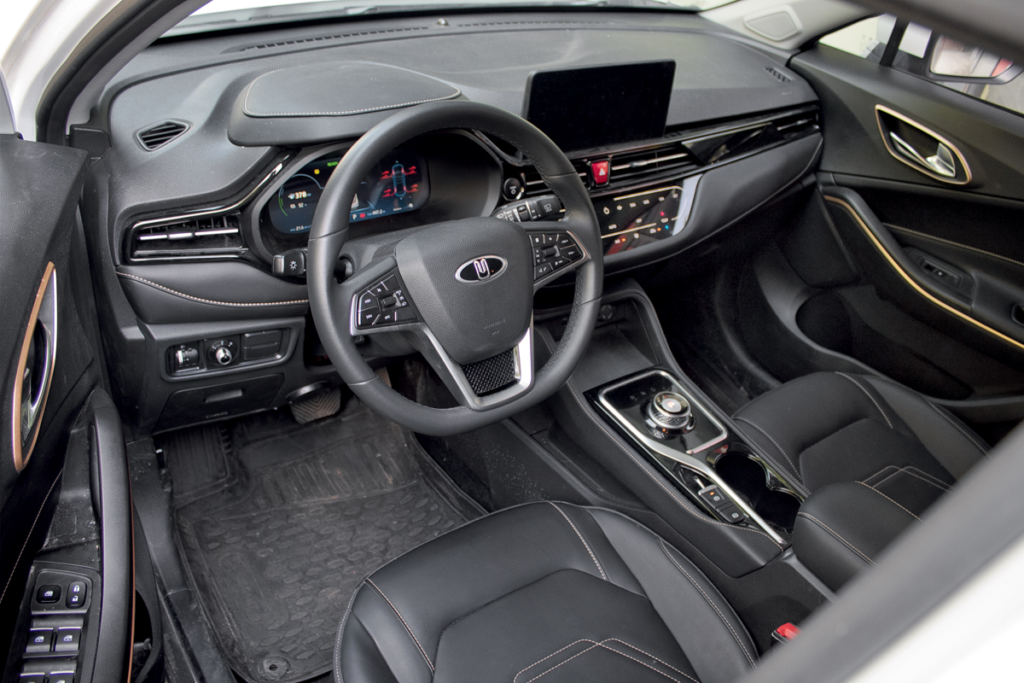
The Moskvich’s interior does not try to seem expensive, all finishing materials are simple – even soft inserts with artificial stitching
Inside a Car-Sharing Moskvich
The Moskvich 3e was waiting for me beside a residential building in Nagatino. The exterior inspection turned up no damage; getting into the cabin reminded me exactly why I dislike car-sharing. People — rental cars should not be treated like this. Dirt on the seats, dirt on the floor, papers in the cupholders. Shame on the drivers who leave them that way. Fortunately I had brought cleaning wipes, and the interior was quickly restored to something acceptable. Now let us drive.
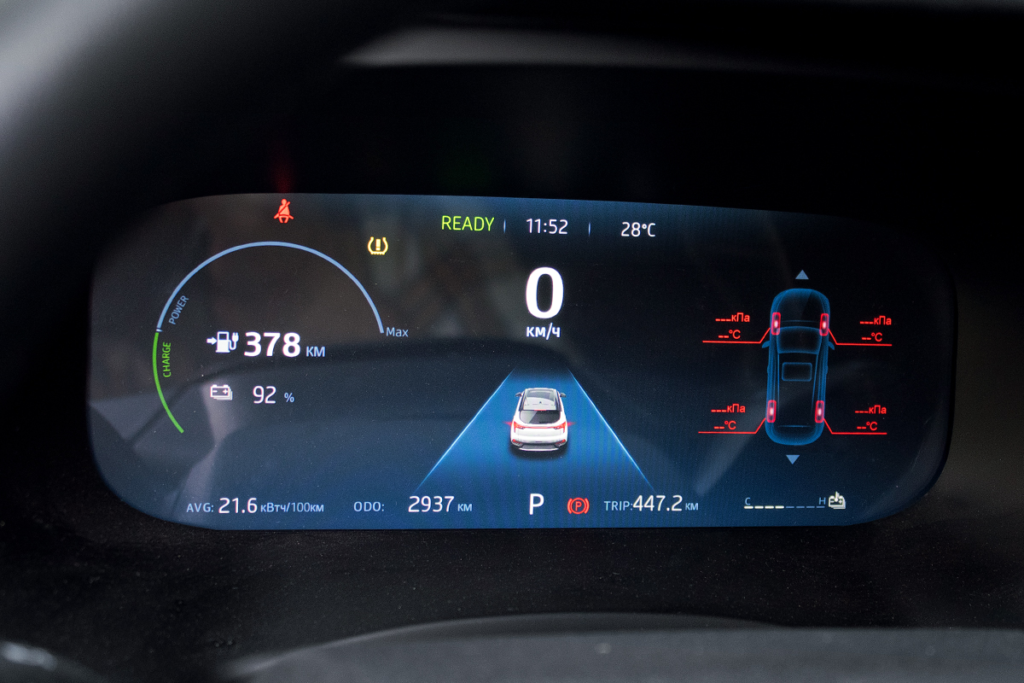
Virtual instruments can only have their color scheme changed
The transmission control dial spins endlessly, as in the Jolion, with no end stops, but the clicks are distinct and the electronics change mode without errors or delays. Select D, release the brake, and nothing happens: the Moskvich only moves when you press the accelerator, and that behaviour cannot be changed.
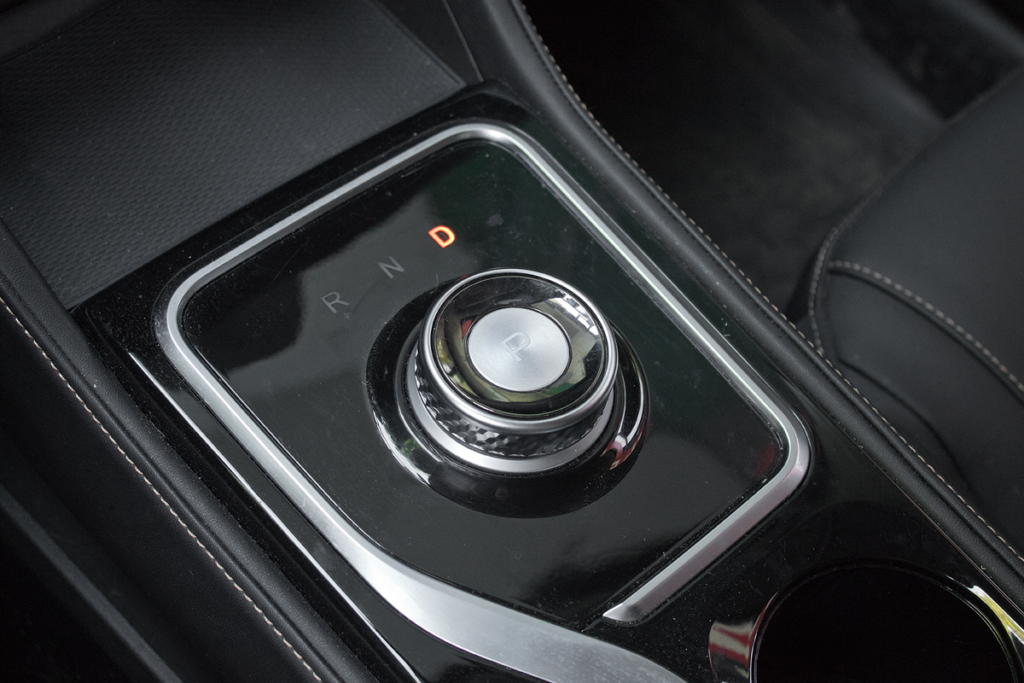
The main difference between the electric car’s interior and the fuel version is the transmission control washer instead of the lever.
Eco Mode, and What Happens Without It
In the default Eco mode the crossover is extremely sluggish and helpless. It feels entirely unresponsive for the first third of the pedal travel, and keeping up with Moscow traffic takes very nearly full throttle. The laziness is at its most inconvenient when parking, where it forces exaggerated pedal movements and creates confusion.
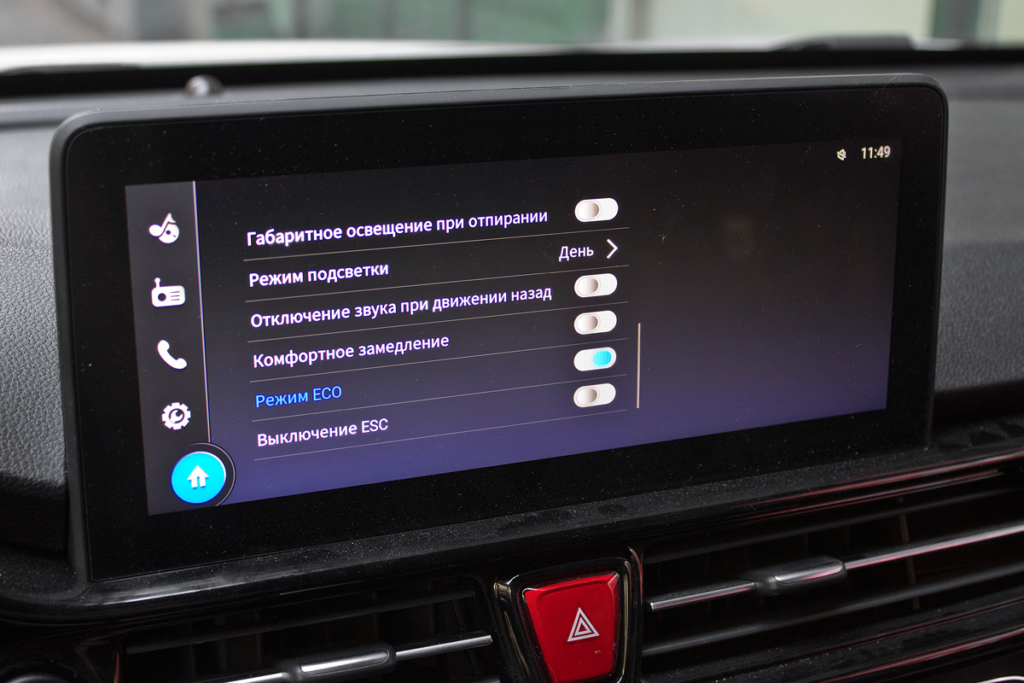
Switch Eco off through the media system and the car is transformed. Now there is no doubt that the motor delivers its claimed 193 hp, despite a considerable kerb weight — 1800 kg, of which the battery accounts for 438. The throttle response still raises questions, though: the Moskvich starts accelerating only after a second’s delay, regardless of how hard the pedal is pressed. It feels like an emissions-strangled petrol car rather than an electric one.
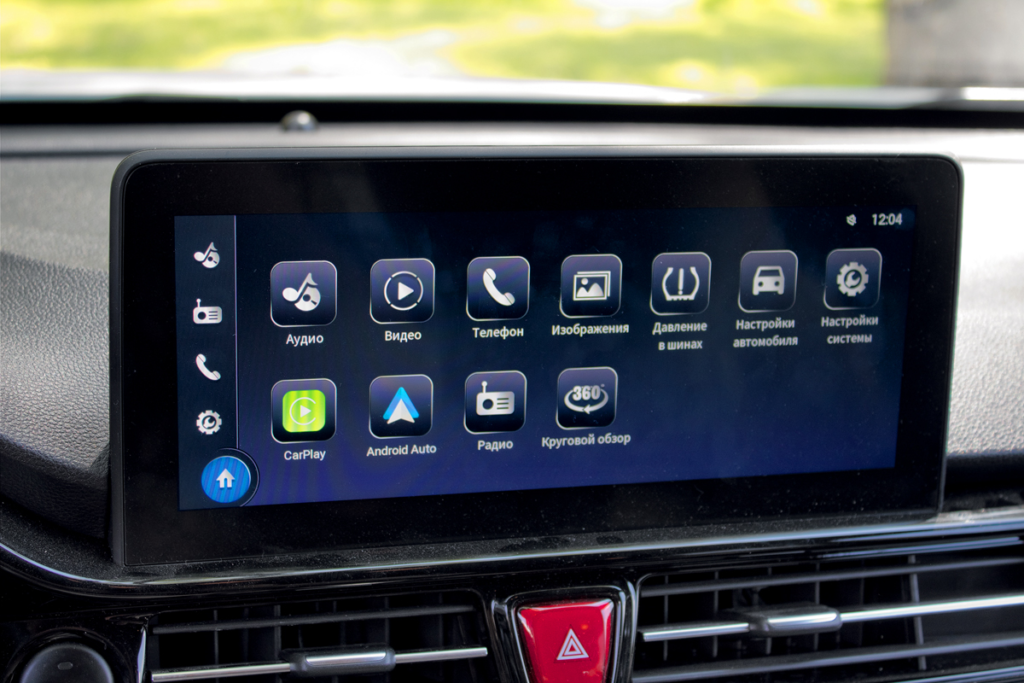
The media system has a sensible Russification and a clear menu structure. The touch screen responds to touches without delays, and pressing is confirmed by sound.
Wheelspin at 60 km/h
Once it does start moving, though, it is a hurricane. On asphalt heated by 30°C weather the Moskvich 3e and its 340 Nm will spin the front wheels — not merely from a standstill but at 60 km/h. Interestingly, it wears reputable Michelin Primacy 4 tyres, Chinese-made but not cheap no-name rubber. The traction control works roughly, cutting and restoring torque at intervals that feel low-frequency by modern standards.
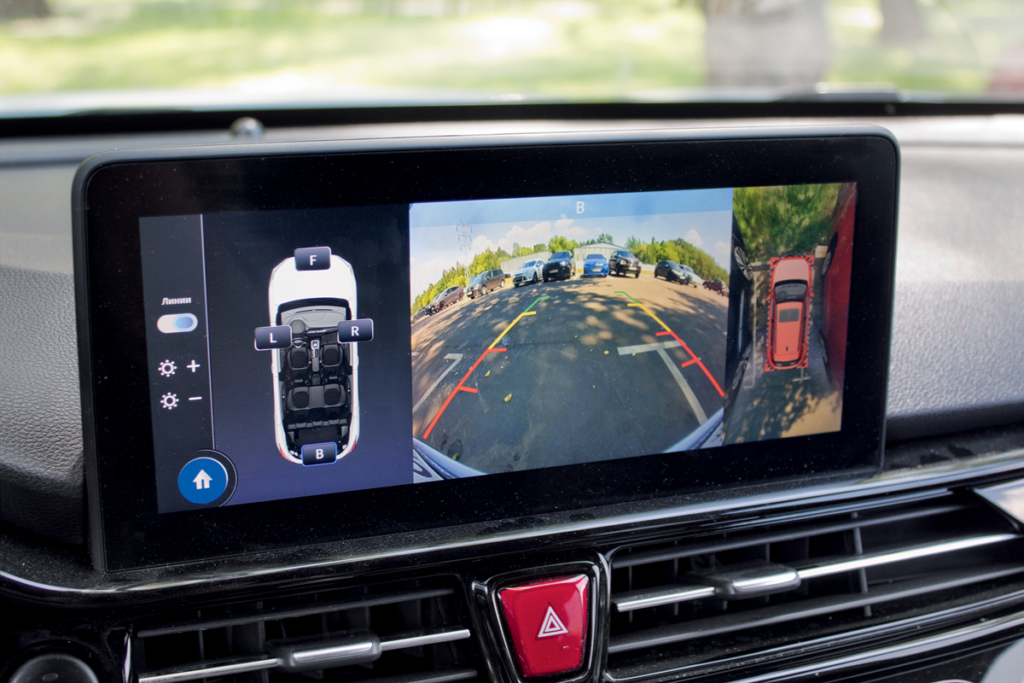
The picture from the all-round cameras is bright and vivid, but the focal length is poorly chosen
On wet asphalt the wheelspin becomes intrusive. On a dry road, even so, the Moskvich reaches 50 km/h in about 3.5 seconds, which suggests the real 0–100 km/h time is better than the official 9.7 s. Neither of the two driving modes suits everyday use, all the same: the unnamed standard mode feels more like Sport, and a third, calmer setting is plainly needed.
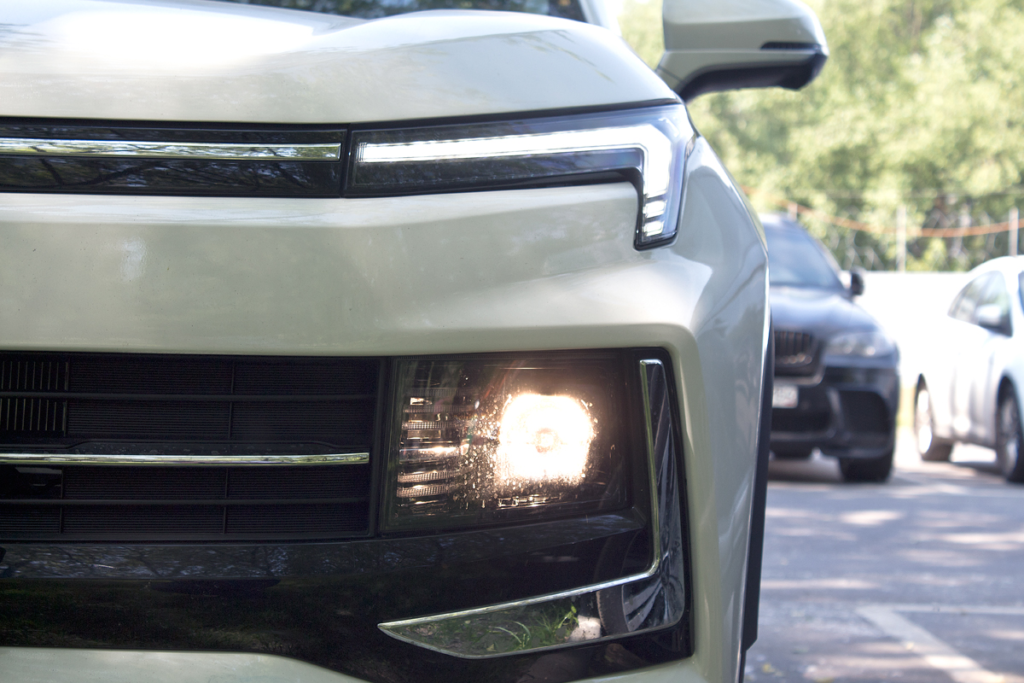
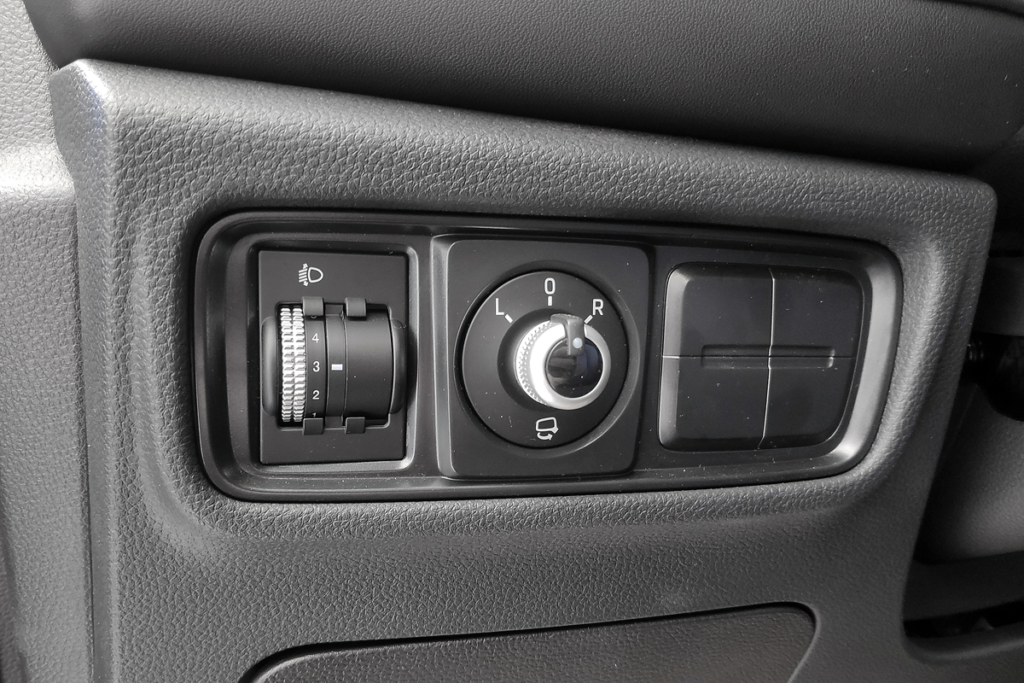
Electric Moskvich has LED headlights, but with a manual corrector
The Tax Trick of an Electric Car
One pleasant advantage of an electric car is its taxable horsepower, which manufacturers rarely advertise but which matters for the tax bill, since the calculation uses the motor’s continuous 30-minute output. For the Moskvich 3e that is just 68 hp, far below the peak. Even if Moscow reinstates a transport tax for electric vehicles, it would come to 816 rubles a year. The 30-minute continuous torque, incidentally, is 120 Nm.
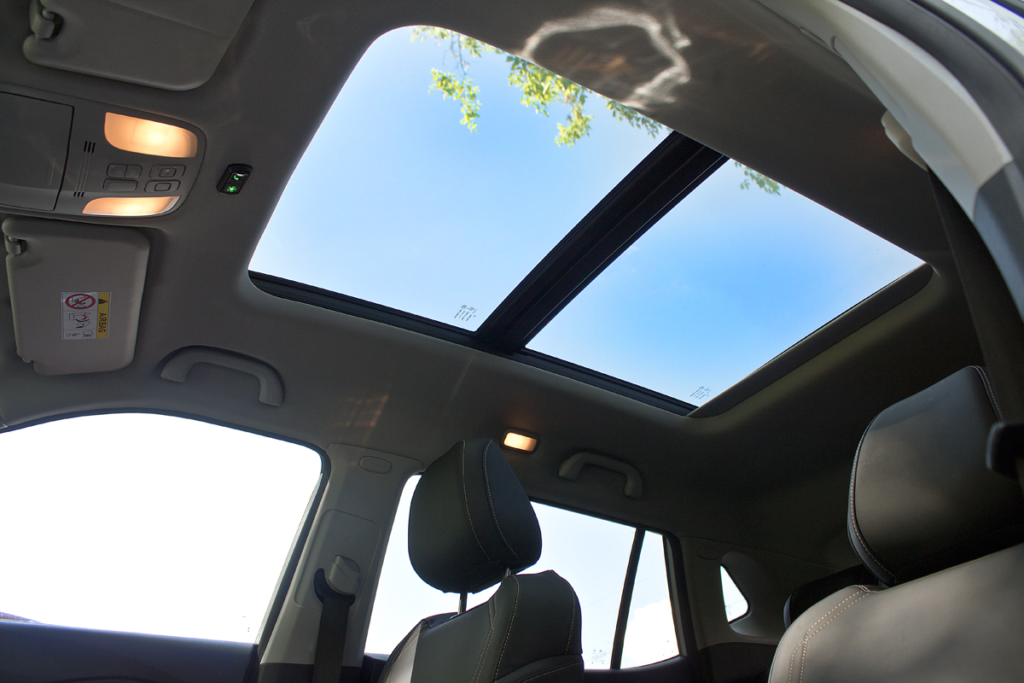
The panoramic roof with a sliding section is exclusive to the electric Moskvich. The petrol ones only have a small hatch.
A JAC Sehol E40X in European Specification
On range: the Moskvich is not China’s JAC Sehol E40X but its European version. JAC’s international website says so in as many words — “EU version” — even though JAC is not represented in Europe at all. That version has a modern 65.7 kWh lithium-ion battery with an NCA cathode, nickel-cobalt-aluminium, along with advanced thermal management and a heat pump, where the domestic Chinese car makes do with a simpler 55 kWh lithium-iron-phosphate pack. The European specification is also why the Moskvich has a CCS2/Type 2 charging port rather than the Chinese GB/T.
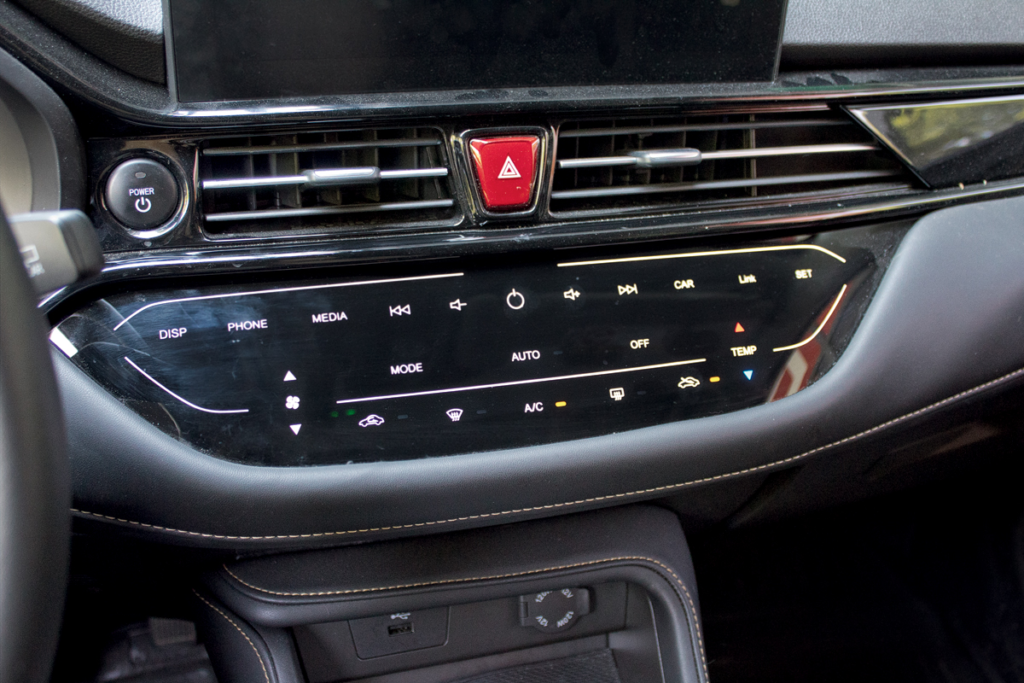
The touchpad duplicates the functions of the main screen, but is difficult to use due to the lack of tactile or audio feedback.
The claimed WLTP range is 410 km. My rental car showed 96% charge and promised 395. Having driven only 18 km I cannot judge those figures properly, but the first impression is that getting close to the claim is realistic.
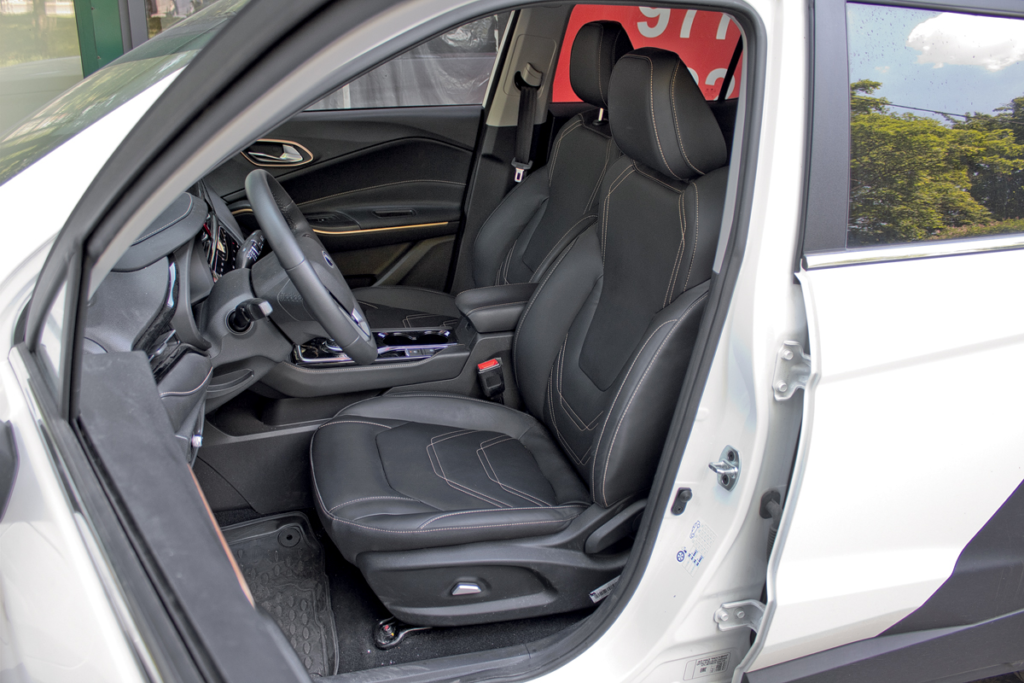
This seat only looks good, but in reality it is soft and uncomfortable. Only the cushion has electric drive, the back is adjusted manually
Everything That Is Not the Powertrain
In short, the electric side of this JAC-Moskvich hybrid is not cutting-edge but is decent enough, and mostly needs software work. As a car, it leaves a great deal to be desired. The suspension is extremely stiff, uncomfortable over city bumps and demanding care over speed humps. Road noise is unexpectedly prominent inside. The driver’s seat is uncomfortable, and the steering wheel is vague and adjusts only for height, which is not enough for my 186 cm.
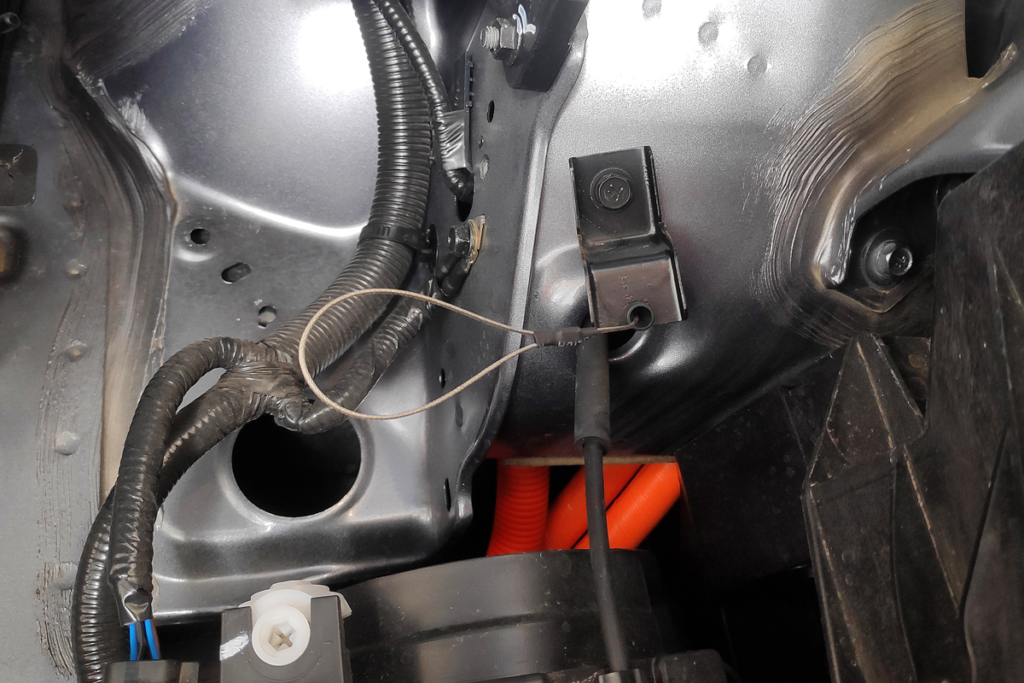
This loop on the right under the hood is designed for emergency release of the charging port.
The greatest disappointment was the climate control. Calibration problems dog even the petrol Moskviches, and in this electric one the air conditioning was practically useless in hot weather. I ended up switching it off and opening the windows, as one did in a Zhiguli many years ago.
Perhaps this particular Moskvich was simply worn out by car-sharing? Its odometer showed 2900 km. Practically new.
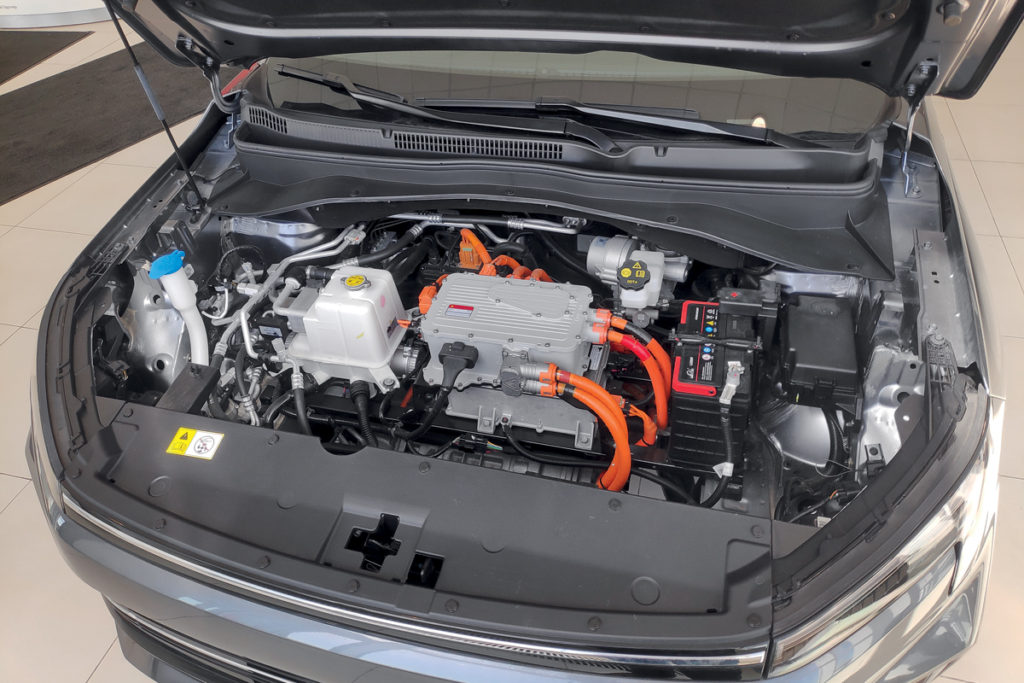
All electrical components are freely located under the hood
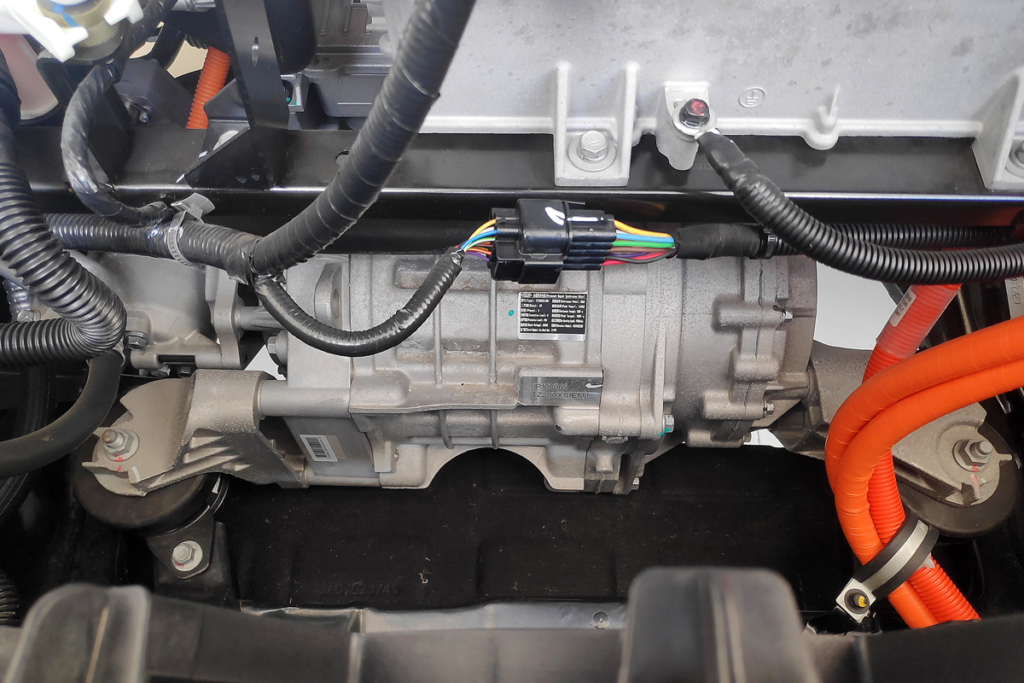
At the very bottom is a three-phase synchronous electric motor TZ200XS, which can spin up to 11,000 rpm
The three does have practical virtues — a relatively spacious cabin, a decent boot, that panoramic roof. But after a year and a half of Russian production no further heated equipment has appeared, only the mirrors and front seats, and the chassis has never been adapted. You could forgive all of it in the petrol Moskvich, at 1.7–1.9 million rubles after the winter price cut. The electric one costs 4.1 million. Even with the government subsidy, available only if you buy on credit, that comes down to 3.2 million — and at that price one expects a far more appealing set of features.
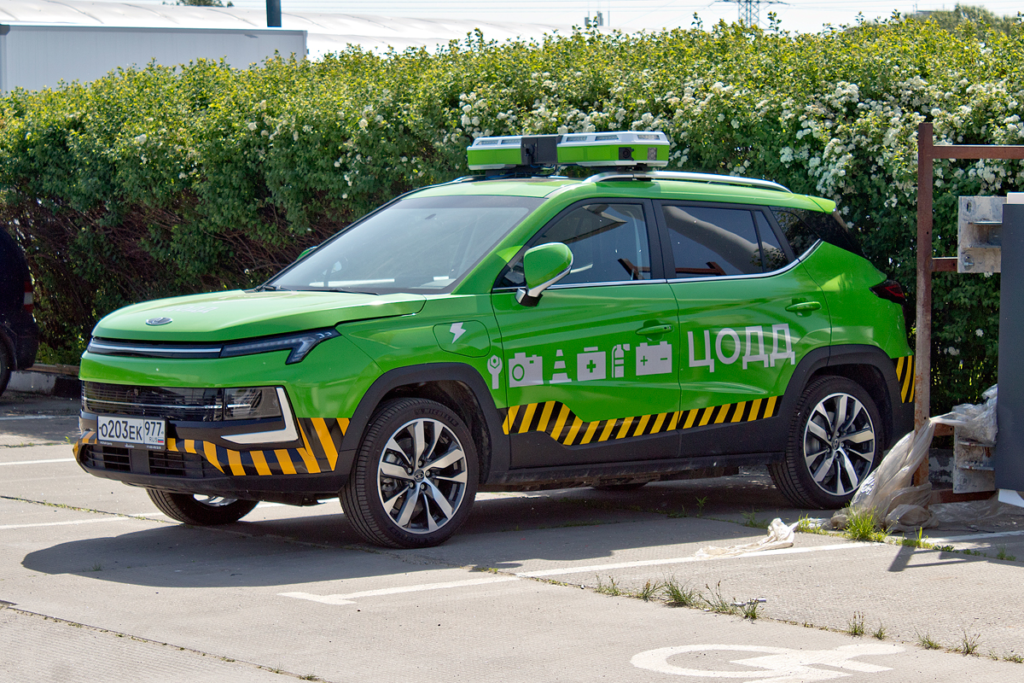
One of the Electric Moskvich’s Professions
Who Actually Buys One
Do private customers buy electric Moskviches at all? At the end of May only one Moscow dealer had them in stock, and I went to find out. The saleswoman admitted candidly that private buyers rarely show more than casual curiosity about electric cars. Most sales go to corporate clients, and primarily to state organisations. Presumably those solve the charging question themselves, because the dealer could not offer a single charging station suitable for installing in a garage.
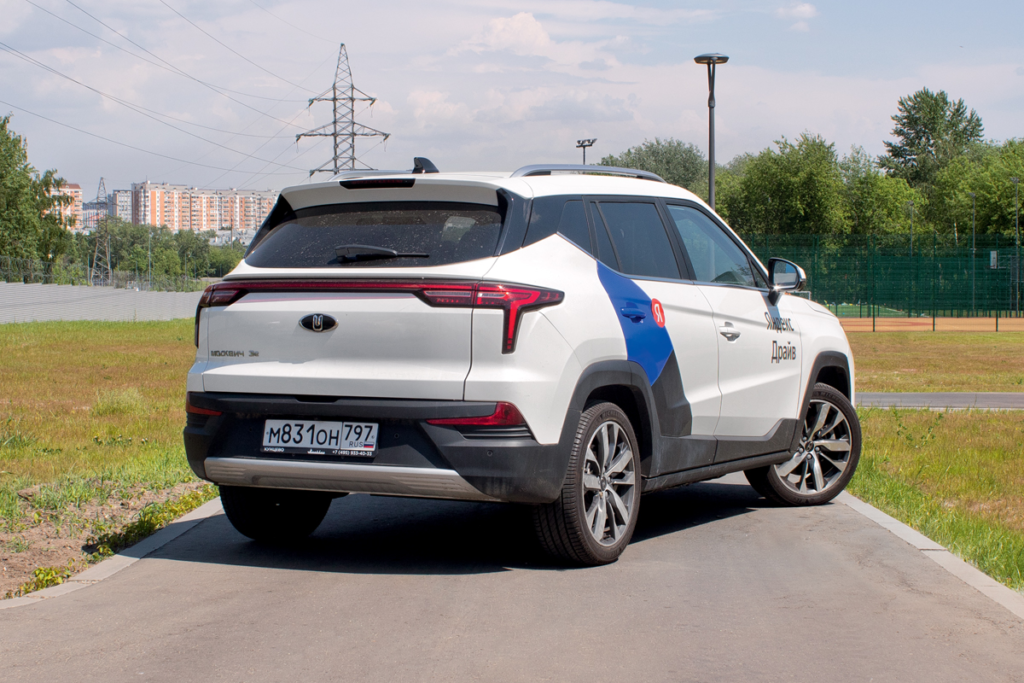
According to Autostat, only 645 electric Moskviches were registered between January and May this year. Without a price cut and a serious improvement in the car itself, it is hard to expect better. Personally I could not find one compelling reason to buy this electric crossover. Another three — the Tesla, even a used one — looks far more attractive for the same money.
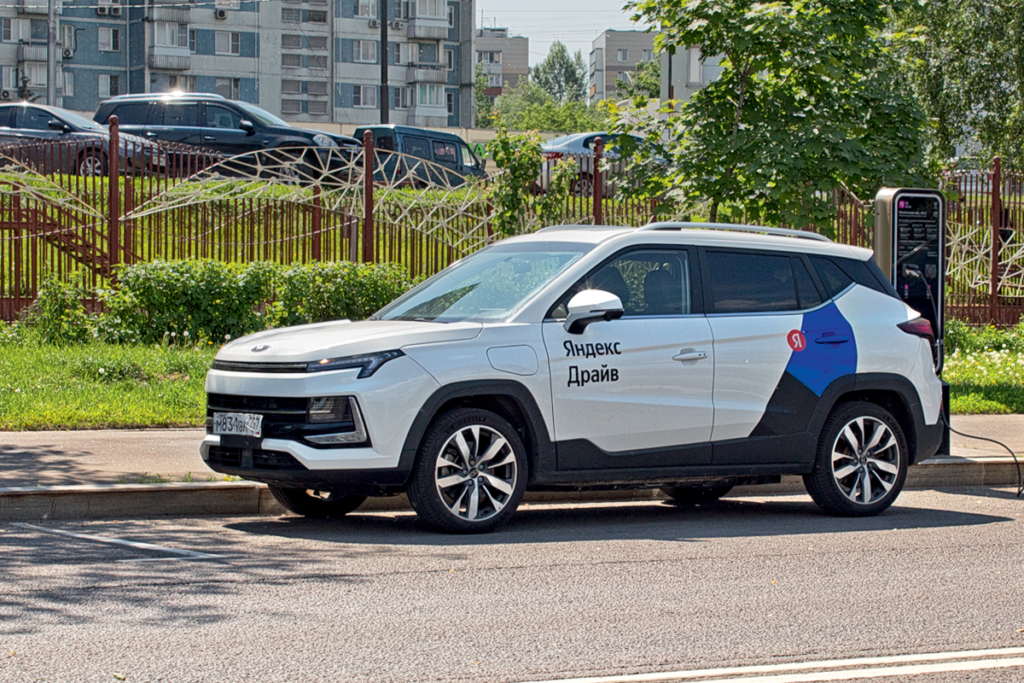
Specifications
| Parameter | Moskvich 3e (Electric Vehicle) |
|---|---|
| Body type | Five-door station wagon |
| Seating capacity | 5 |
| Dimensions (mm) Length Width Height Wheelbase Track (front/rear) Ground clearance (mm) | 4410 1800 1660 2620 1510 / 1500 170 |
| Luggage capacity, L | 520–1050* |
| Curb weight, kg | 1800 |
| Gross weight, kg | 2175 |
| Motor | Electric, synchronous, permanent magnet |
| Motor location | Front axle, transverse |
| Max. power, hp/kW | 193 / 142 |
| Max. torque, Nm | 340 |
| Drive type | Front-wheel drive |
| Front suspension | Independent, spring, MacPherson |
| Rear suspension | Semi-independent, spring |
| Front brakes | Ventilated disc |
| Rear brakes | Disc |
| Tire size | 225/45 R18 |
| Max. speed, km/h | 140 |
| Acceleration 0–100 km/h, s | 9.7 |
| Traction battery type | Lithium-ion (NCA) |
| Battery capacity, kWh | 65.7 |
| Range (WLTP), km | 410 |
*With rear seats folded
Photo: Igor Vladimirsky
This is a translation. You can read the original article here: Электрик на час: знакомство с кроссовером Москвич 3е

Published July 03, 2025 • 8m to read