
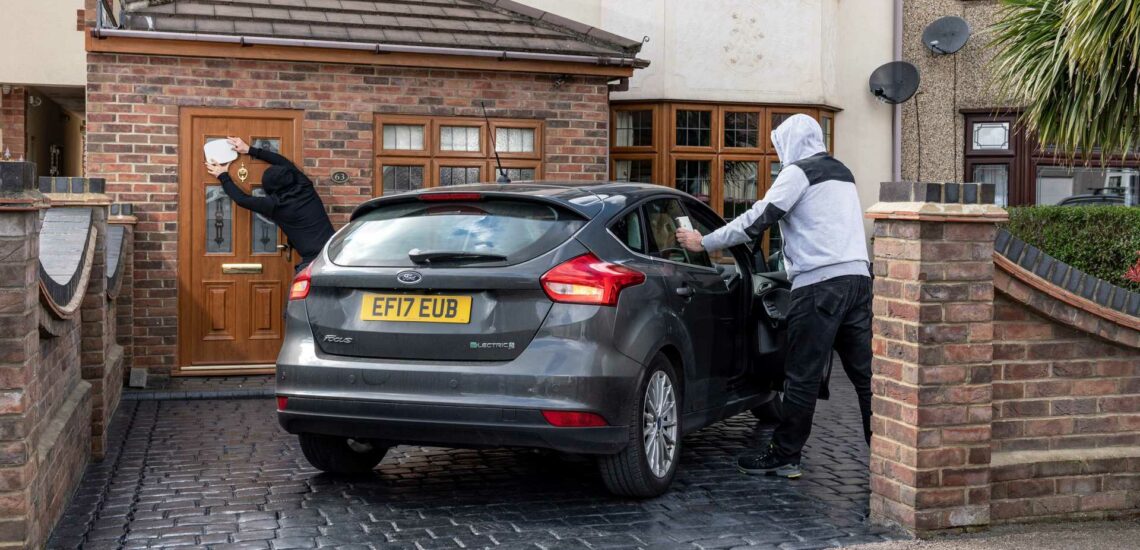

Keyless car theft is on the rise, and criminals are constantly finding new ways to bypass modern vehicle security systems. If you drive a car with keyless entry or a push-button start, your vehicle could be at risk. Here are five proven ways to protect your car from relay attacks and other keyless theft methods.
What Is Keyless Car Entry — and Why Is It a Security Risk?
Keyless entry and push-button start systems have become standard in modern vehicles. They allow drivers to unlock and start their car without physically handling their key fob — a genuine convenience, especially when your hands are full.
However, that same convenience has created a significant security vulnerability. Tech-savvy criminals have learned to exploit the wireless signals these systems rely on, making keyless cars an increasingly popular target for theft.
The Rise in Keyless Car Theft
The scale of the problem is significant and growing. Key statistics highlight the trend:
- According to the Office for National Statistics (ONS), more than 89,000 cars were stolen in England and Wales in 2017 — a 56% increase compared to 2016.
- In 2017, 80% of recovered stolen vehicles tracked via GPS had been taken without the owner’s key, up from 66% in 2016.
- While overall car theft rates remain lower than the early 1990s — largely thanks to improved security technology — the downward trend reversed sharply in 2016 and has continued to worsen.
How Do Relay Attacks Work?
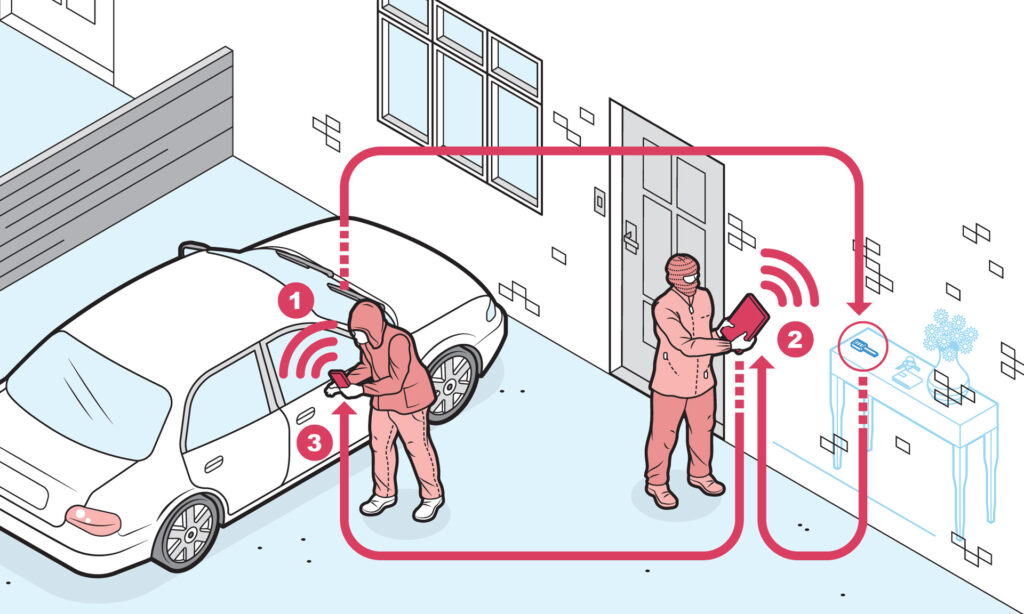
The most common method used to steal keyless cars is known as a relay attack. Here’s how it works:
- Keyless entry systems work by sending a short-range radio signal from your key fob to the car. When the car detects the signal nearby, it unlocks and allows the engine to start.
- In a relay attack, two criminals work together — one stands near your home to intercept the signal emitted by your key fob (even through walls), while the other stands next to your car with a relay device.
- The intercepted signal is amplified and transmitted to the car, which is tricked into thinking the real key is present.
- The entire process can take less than 60 seconds, with no damage to the vehicle and no signs of forced entry.
How to Protect Your Car from Keyless Theft
Good car insurance is essential, but prevention is always the better approach. Fortunately, there are several simple and cost-effective steps you can take to significantly reduce the risk of your keyless car being stolen.
- Store your keys away from doors and windows. Key fob signals can pass through walls and glass. Keep your keys in a drawer or cupboard well away from the front door and any exterior windows to reduce the chance of your signal being intercepted.
- Use a signal-blocking case or metal container. Faraday pouches, signal-blocking key cases, or even a metal tin or microwave can prevent your key fob’s signal from being detected. Metal acts as a shield against radio frequencies, cutting off the relay attack at the source.
- Fit a steering wheel lock. A physical steering wheel lock adds a highly visible, low-tech layer of deterrence. Even if thieves manage to unlock and start your car, a steering wheel lock makes it very difficult to drive away — and most criminals will move on to an easier target.
- Install a GPS tracker — and display the sticker. A tracker won’t prevent theft, but it dramatically increases the chances of recovering your vehicle. Displaying a tracker warning sticker on the windshield can also deter thieves before they attempt anything.
- Set up a motion sensor alarm or CCTV camera. Relay attacks require at least one criminal to get very close to your home. A visible security camera or motion-triggered alarm can be enough to scare off would-be thieves before they get close enough to steal your signal.
Final Thoughts
Keyless car theft is a growing threat, but it’s not inevitable. By combining a few simple precautions — such as a signal-blocking pouch, a steering wheel lock, and a home security camera — you can make your vehicle a much harder target. The best defence is a layered one: the more obstacles a criminal faces, the more likely they are to walk away.

Published July 08, 2021 • 4m to read