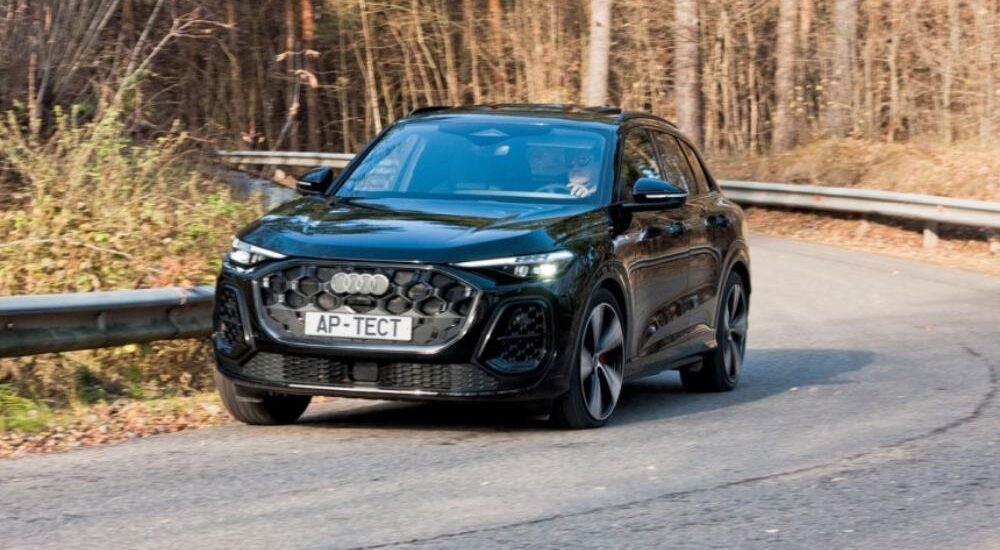

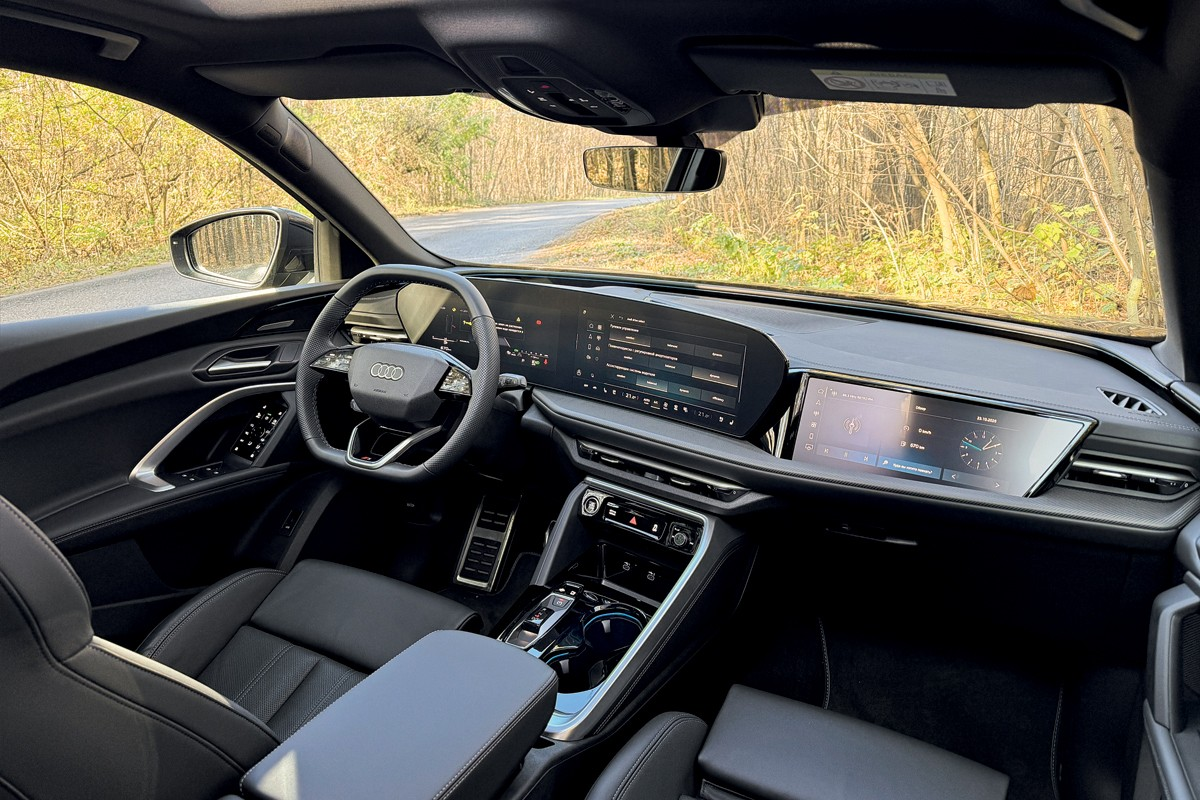
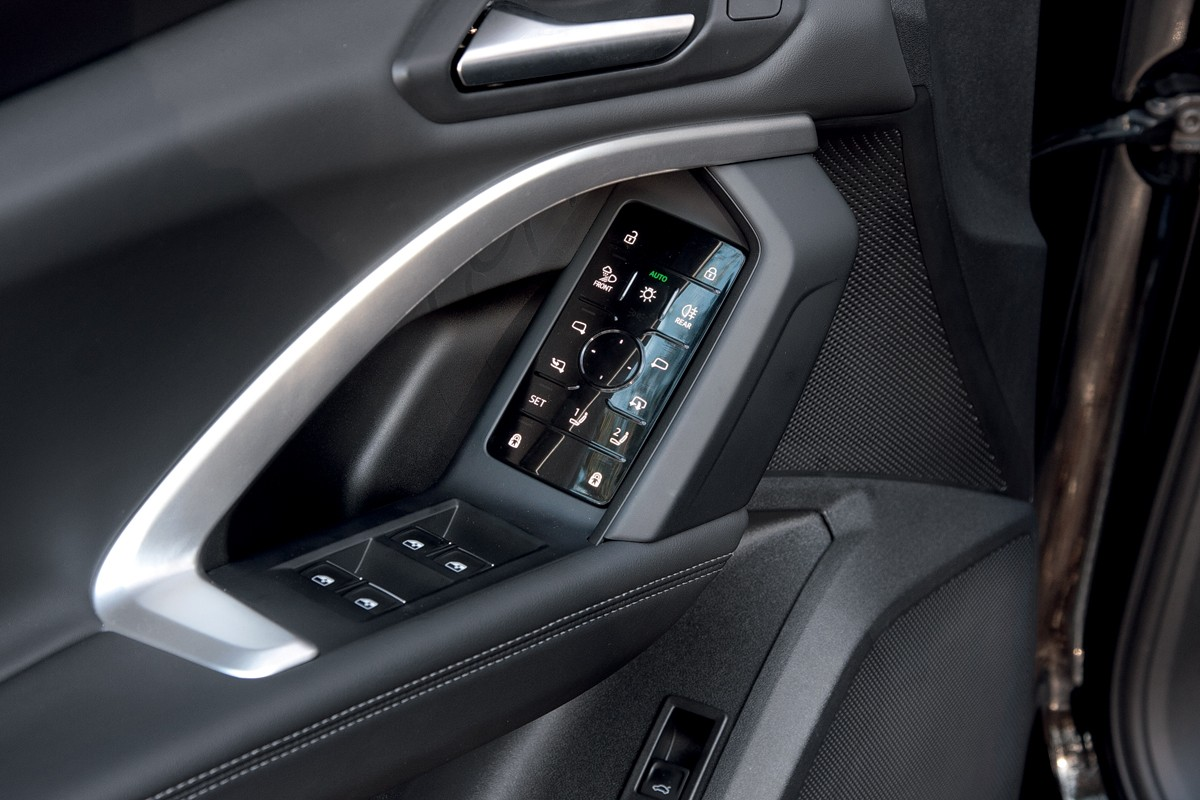
In one very black Audi there were two curved displays and one rectangular one, and on the driver’s door trim, instead of a pull handle, sat a touch-sensitive “calculator” that gathers up the lights, mirrors, seat memory and door locks. The gaudiness is amplified by its neighbor: the window switch panel, where the buttons are ordinary matte plastic. It jars the eye, and every time you close the door you find yourself cursing the designer — the calculator pushed out a proper handle, so you have to poke your fingers into a shallow, awkward slot.
What Are the Design Departments in Munich and Ingolstadt Thinking?
The attempt to reinvent the wheel, to find a new identity in the new automotive reality, feels painful. Cost reduction is clearly the priority, and that explains a lot:
- Recycled materials, which Audi gives the pretty names Kaskade and Dinamica
- The abandonment of familiar physical switches
- The visual emptying-out of the dashboard
BMW has gone furthest in the wrong direction. The interior of the current X3 resembles a corner of a mid-tier open-plan office more than a car cabin.
The Good News: Audi Still Knows How to Build a Driving Position
Audi has at least kept the excellent seating position. The sport seat in the S line version can be adjusted to any body shape, it’s correctly positioned, and it distributes weight properly.
But why does the steering wheel have the same shape as something out of a Changan? Fine, the flat bottom is a long-standing brand signature — but why shave the top off as well?
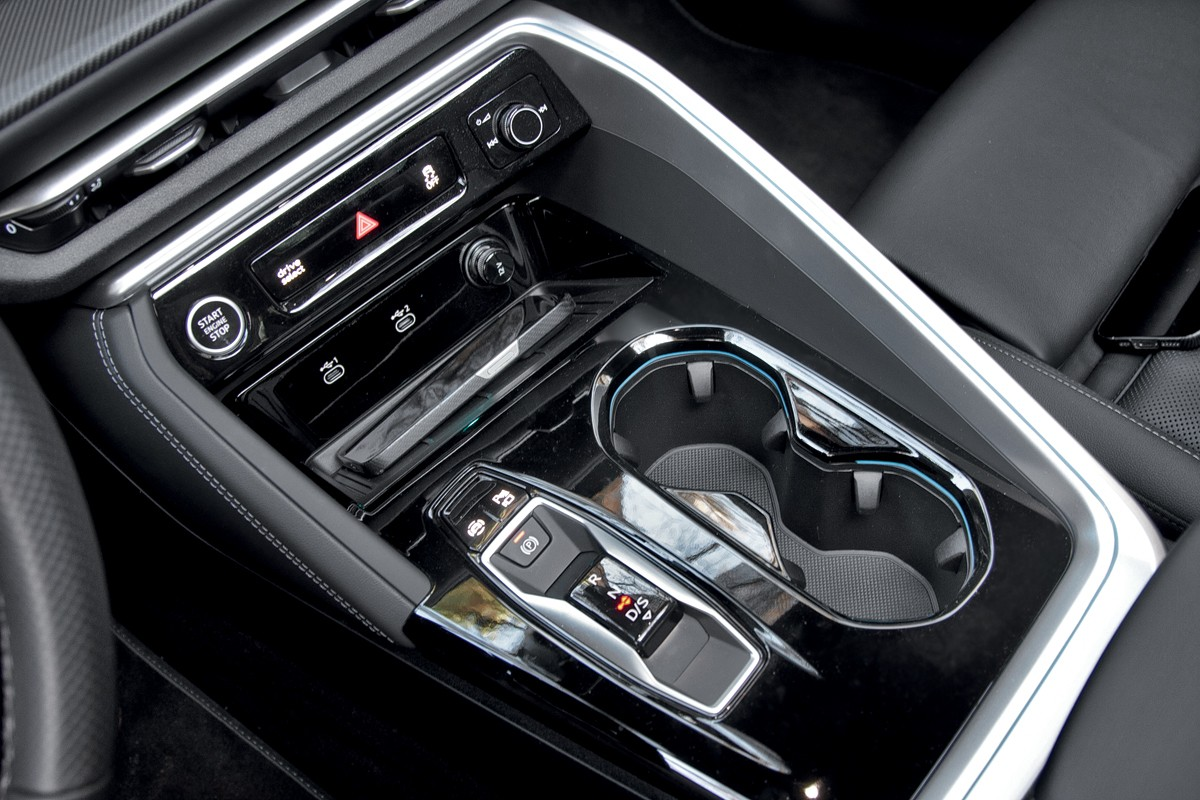
And what exactly did automatic gear selectors do wrong? They’ve been reduced to ugly little pods that still take up space on the center tunnel anyway. So the Q5 gets a glossy something instead of an old-fashioned lever. The wireless charging pad was another surprise: steeply angled and facing away from the driver.
The Instrument Display Has Forgotten Audi’s Own Heritage
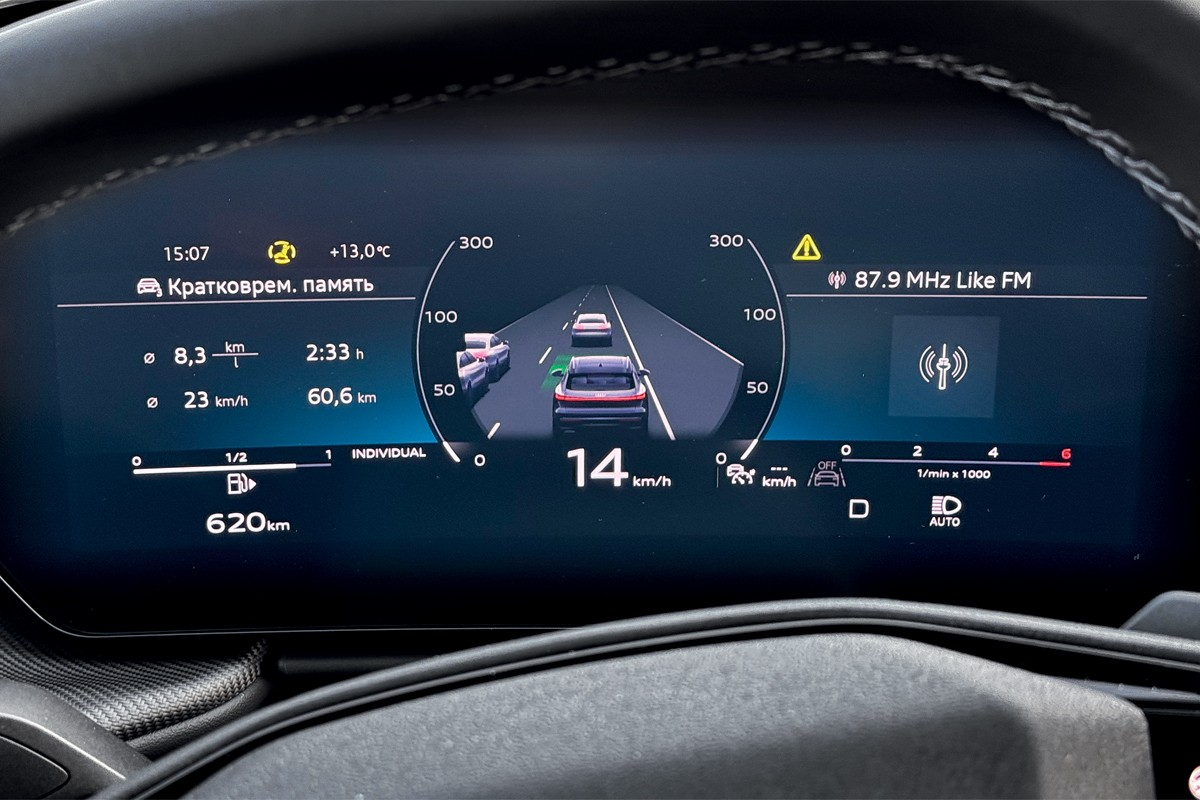
If it weren’t for that comical door panel, this interior would be indistinguishable from a crossover out of China. Just look at the instrument display — Audi has completely forgotten its family values, removed proper gauges and left informativeness in the past.
The speedometer arc is especially striking, marked 0–50–100–300. I have never seen anything like it.
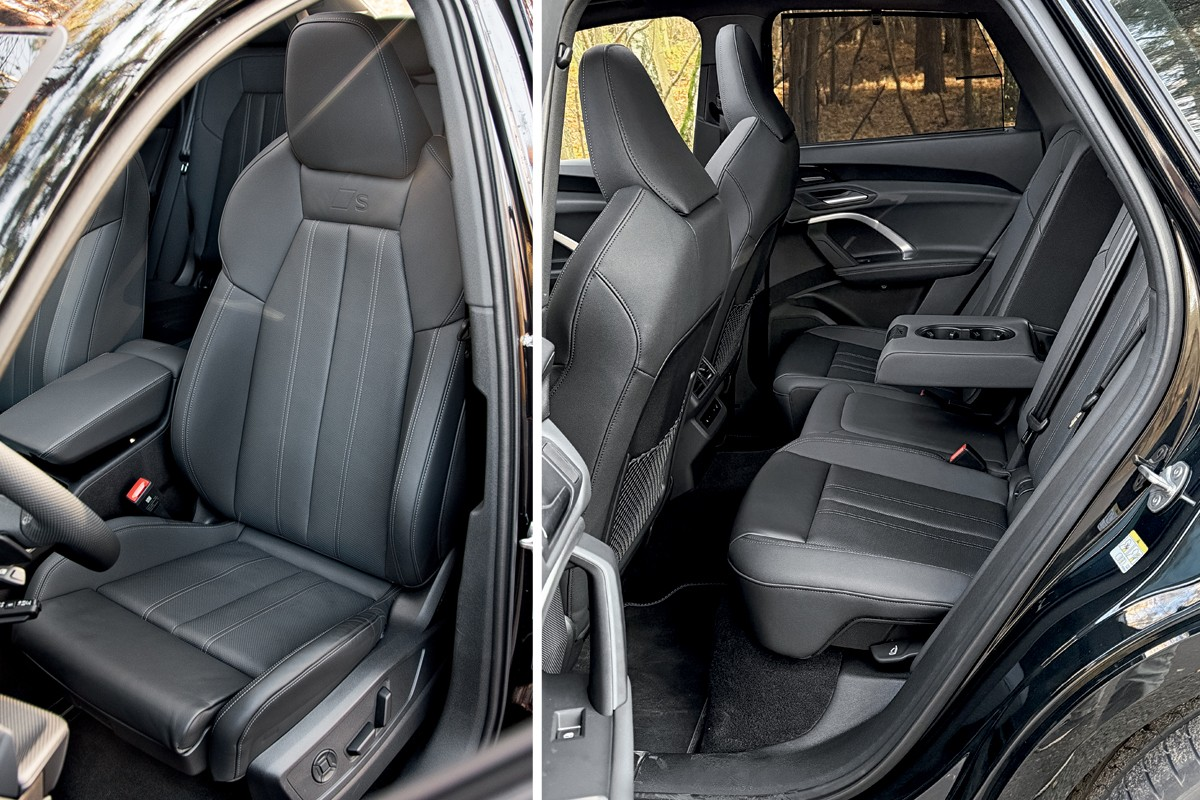
In the back, legroom is surprisingly limited, and the lower edge of the seat-back pocket presses uncomfortably against one’s shin. The seating geometry is well-designed, though the door sill is high.
Rear Space: Surprisingly Tight for a Q5
The second row of the Q5 is unexpectedly cramped. The more compact Q3 offers roughly the same amount of room.
It’s not even clear why the rear bench slides back and forth, because any position other than the rearmost is uncomfortable, and if you want more boot space it’s simpler to fold the backrest. This is where the optimization effort should have gone, rather than into the driver’s workspace.
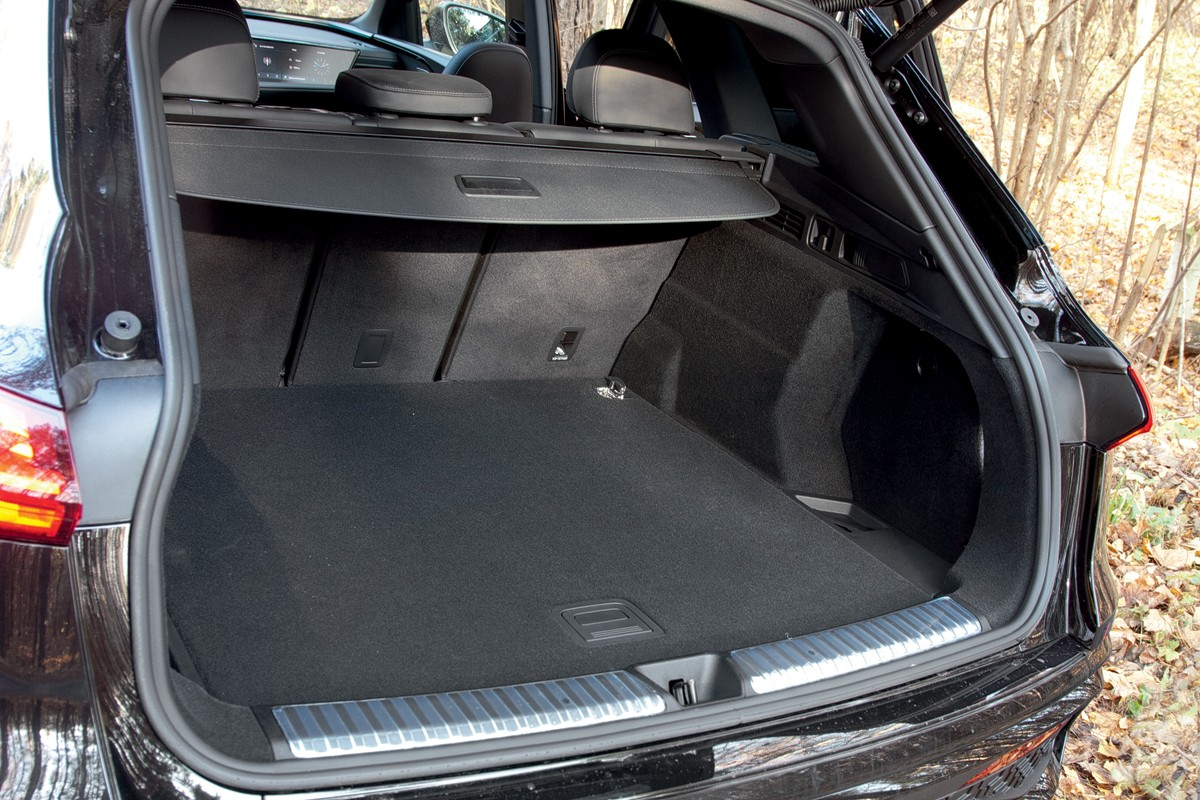
German quality and a meticulous approach survive only behind the tailgate, where the materials are pleasant, the shape is right, and the underfloor storage is generous.
Exterior Design: A Strong Face, an Awkward Rear
How do you feel about the looks? In black trim it’s hard to make out the details of the new face, but the front is the most successful part of the Q5 — conservative enough, aggressive enough. The profile is recognizable. The rear, with its fake diffuser and the exhaust tips beneath it, is odd. The X3 came out bolder and more technocratic.
Sales Reality Check: The X3 Is Pulling Away
Buyers agree with that assessment, especially in the home American market — note that Audi builds the Q5 in Mexico while BMW builds the X3 in the United States.
The 2026 numbers tell the story: BMW’s X3 was its best-selling model in the US in the third quarter, with 22,457 units delivered between July and September, and in the first half of 2026 the X3 found 37,671 buyers against 22,138 for the Q5. The brand picture is worse still: Audi’s US sales fell 15 percent in the third quarter and are down 16 percent for the year at 107,667, with the X3 and X5 together attracting more buyers than Audi’s entire US lineup.
A gap of this size between these two models simply didn’t exist before. In Germany the deficit is smaller, but BMW is still ahead.
Ride Quality: The Air Suspension Is Genuinely Brilliant
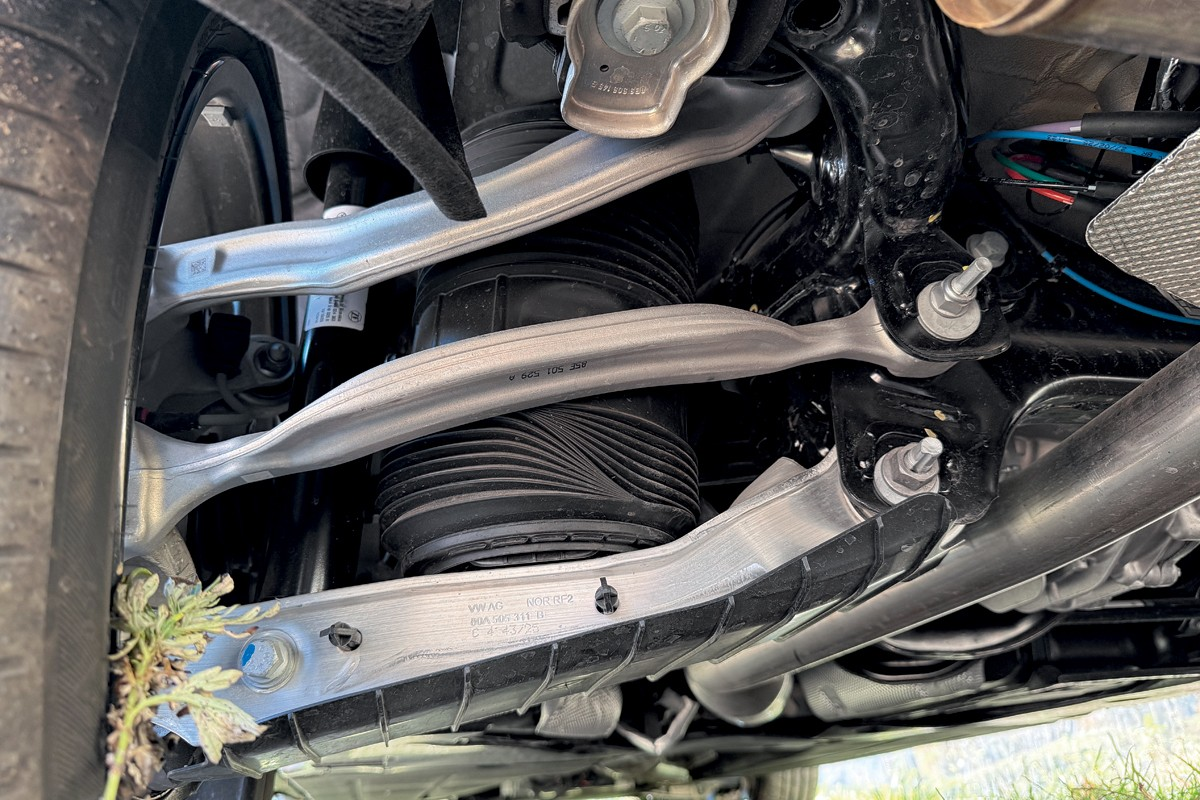
The first few kilometers behind the wheel do nothing to explain those sales figures. Yes, I drove an X3 with suspension settings adapted for the Chinese market, which were fairly unpleasant — but this Q5 turned out to be a Korean-market car, and its air suspension handles Russian road surfaces superbly.
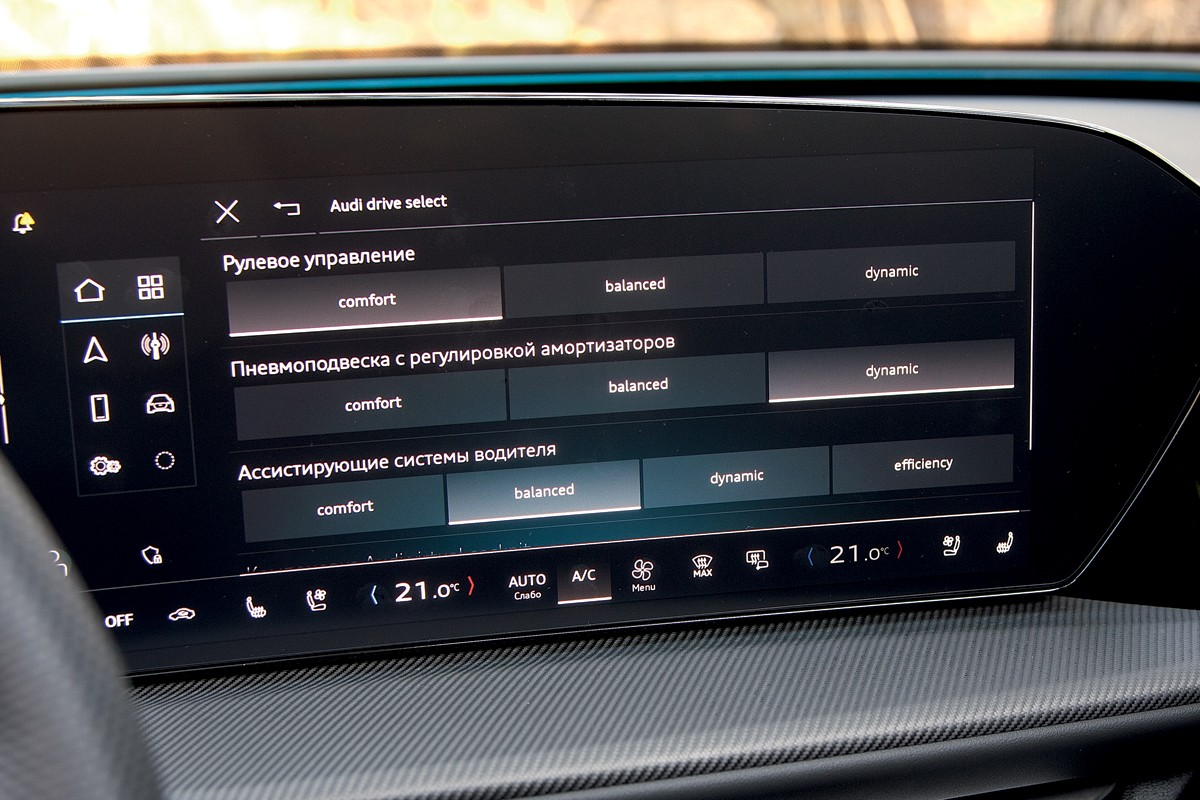
There are three modes for the electronically controlled dampers, and all three are genuinely functional:
- In Comfort you get no unpleasant float
- In Dynamic there’s no excessive stiffness
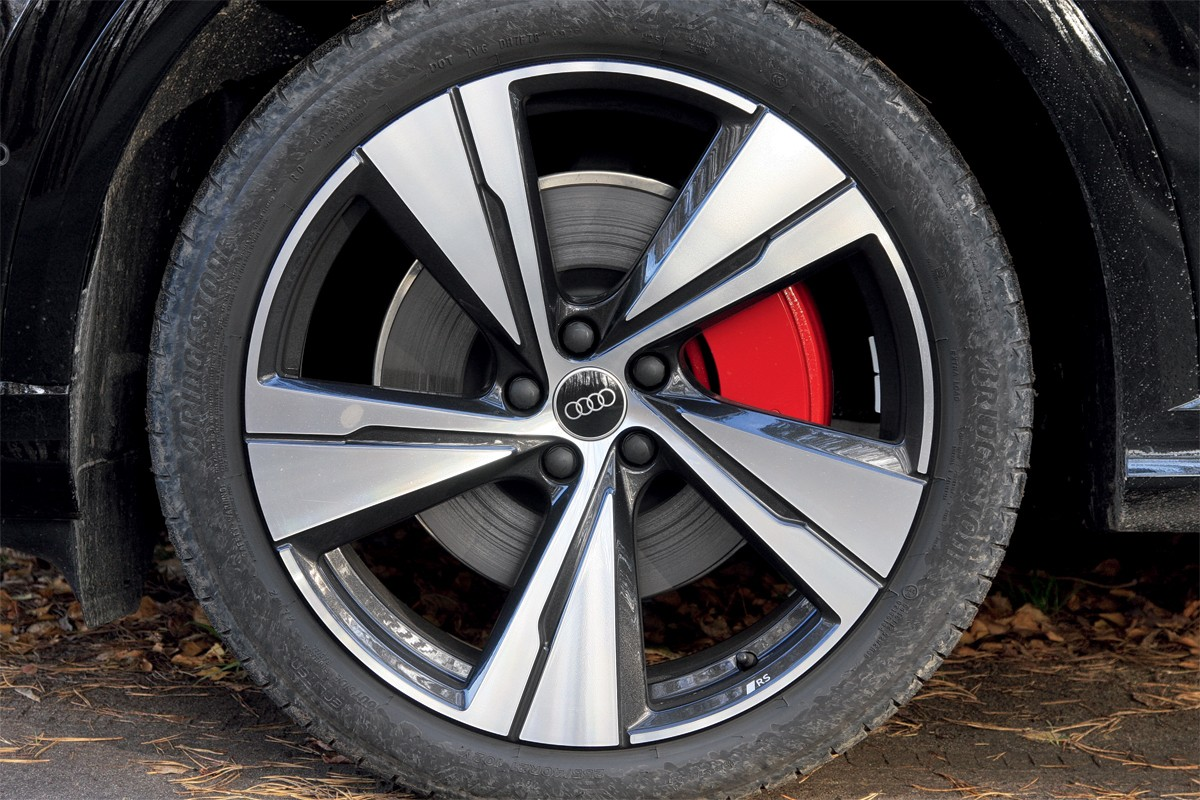
- On 19-inch wheels this Q5 rides as though it were on 16s with fat sidewalls
It deals especially well with large undulations, carefully checking the body on the rise and gently setting it back down. No jolts, no impacts. Sharp inputs like expansion joints and tram tracks are handled slightly less well, but next to the X3 and the Mercedes GLC the ride comfort is impressive.
Have I finally found a normal European car that will show these Chinese crossovers how to tune a vehicle properly? The very first brake application says no.
Brakes and Powertrain: A Pedal Like a Switch
The “on/off” brake pedal was a hybrid trait about 15 years ago, and I didn’t expect Audi to still be doing the same thing today:
- Short free play
- A working stroke that isn’t the most transparent
- Obvious over-assistance during gentle braking
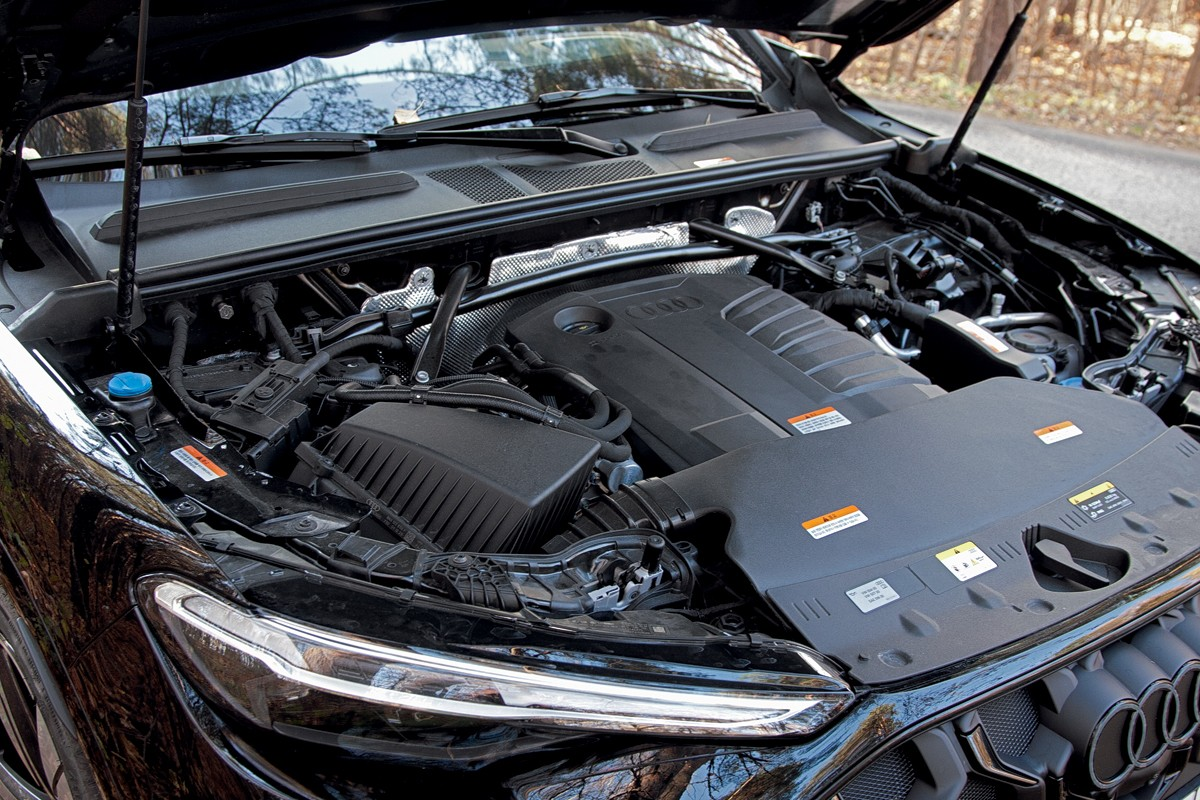
The accelerator, by contrast, is set up decently. But from the combination of a 2.0-liter diesel (204 hp) and a 48-volt electric motor (24 hp) you expect rather better performance than eight seconds to 100 km/h. The diesel also grumbles more intrusively than the good old N47 in my BMW X1.
I remember the completely seamless stop-start system of the petrol GLC, and every time I’m surprised by the vibration and rumble as the Q5’s diesel fires up. Average consumption is comparable to a petrol engine, while the performance feels modest — especially on country roads. Although, given what happens to the steering, perhaps that’s just as well.
Steering: Artificial at Low Speed, Unhinged at 100 km/h
A minute ago, at city speeds, the shaved-off wheel felt artificial but reasonably comprehensible. At 100 km/h the electric power steering completely loses its mind. The self-centering force multiplies and has nothing to do with feedback. Yet the sharpness of response is enormous.
So on one hand you’re afraid of overdoing it, and on the other you have to apply real effort just to turn the wheel.
The Real Problem: This Q5 Wants to Oversteer
I remember perfectly well my earlier session with the Q5 and the 3.0 diesel, where I wrote that in the company of such a perfect car I would get a little bored. I also haven’t forgotten the A4 sedan with a manual gearbox and a Torsen center differential on the snowy mountain road of the proving ground. That was pure joy in the form of a practical family car.
Now I’m not only failing to enjoy myself — in places I’m slightly scared. With even mildly spirited cornering, this Q5 slides into oversteer as though the rear multilink mounts had been unbolted.
I honestly can’t recall another car with this character. You turn into a corner and, at a perfectly harmless speed, the rear wheels are already sliding. As far as I know, every civilian car is tuned for understeer, yet here there’s a surplus of the opposite, like a rear-engined Zaporozhets with its swing axles.
And where’s the stability control? It waits until you make a corrective steering input. Then it grabs the Q5 hard with the brakes, holds it for a second — and lets go completely.

Servicing Headaches: Audi Is the Hardest Parallel Import
Recent-generation Audis are also among the most difficult parallel-import cars to maintain:
- Diagnostics require original, expensive equipment
- Resetting the service interval or changing the rear pads means connecting online to the control units and unlocking them with paid “tokens”
- The car retracts the rear pads for a window of just an hour and a half — miss it and you repeat the whole procedure
From the standpoint of this kind of digital servicing, BMW is the simplest brand to live with.
Photo: Vladimir Melnikov
This is a translation. You can read the original article here: Нюансы Audi Q5 последнего поколения: наш тест

Published November 06, 2026 • 8m to read